Falling victim to a consumer scam or discovering unauthorized charges on your bank statement is a jarring experience. Whether you were tricked by an online shopping scam, an imposter phishing email, an unauthorized subscription renewal, or a stolen credit card number, the initial panic can feel overwhelming. Scammers count on confusion and delay to make off with your funds permanently.
However, discovering a fraud charge is not the end of the line. Federal consumer protection laws, card network operating rules, and banking regulations grant consumers powerful tools to challenge unauthorized transactions and reverse payments. Knowing how to act quickly, organize documentation, and file an effective claim can mean the difference between losing your money and securing a full refund.
This comprehensive guide details how to dispute fraudulent charges after a scam, navigate bank chargebacks, leverage federal protection laws, and take crucial security steps to prevent future fraud.
Understanding Your Legal Protections: The FCBA and EFTA
 Before contacting your financial institution, it helps to understand the federal laws that safeguard consumer funds. In the United States, two primary regulations shield consumers from unauthorized charges and fraudulent transactions:
- The Fair Credit Billing Act (FCBA): This law protects credit card users against billing errors, unauthorized charges, and goods or services that were paid for but never delivered. Under the FCBA, your maximum liability for unauthorized credit card charges is capped at $50, and most major card issuers offer $0 fraud liability guarantees.
- The Electronic Fund Transfer Act (EFTA): Covering debit cards, ATM transfers, and electronic bank account withdrawals, the EFTA limits your financial liability based on how quickly you report the fraud. If reported within two business days of noticing the unauthorized transaction, your liability is capped at $50. Reporting within 60 days limits liability to $500, while waiting beyond 60 days can result in unlimited loss.
Step 1: Contact Your Bank or Card Issuer Immediately
Speed is critical when managing fraudulent activity. The moment you notice an unauthorized charge or realize you have been scammed into making a payment, notify your bank or credit card provider.
- Call the Official Fraud Line: Dial the customer service or fraud department phone number listed on the back of your physical payment card or inside your bank’s official mobile app. Avoid using numbers found in text messages or emails regarding the disputed transaction.
- Freeze or Cancel the Card: Request an immediate freeze or cancellation of the compromised card. The bank will issue a replacement card with a new primary account number (PAN) to prevent subsequent charges.
- Report the Specific Transactions: Detail the date, merchant name, and exact amount of every unauthorized charge. Clarify whether the charge was completely unauthorized (stolen card details) or the result of a fraud merchant failing to deliver promised goods or services.
Step 2: Initiate a Formal Billing Dispute or Chargeback
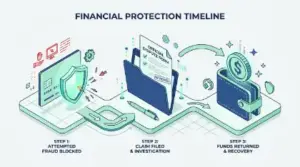
Reporting fraud to your bank triggers a process known as a payment dispute or chargeback. A chargeback forces the merchant’s acquiring bank to withdraw the funds temporarily while the credit card network (Visa, Mastercard, American Express, or Discover) investigates the transaction.
To file a winning dispute, submit a formal written notice or complete your bank’s digital dispute portal using these structured steps:
- Specify the Reason Code: Select the accurate dispute category, such as “Unauthorized Transaction,” “Goods/Services Not Delivered,” or “Defective/Not as Described.” Selecting the wrong reason code can cause administrative delays.
- Provide Supporting Documentation: Upload concrete evidence, including order confirmation emails, receipts, shipping tracking records, screenshot history of seller interactions, and proof that you attempted to contact the merchant for a direct resolution.
- Request Provisional Credit: Under federal guidelines, banks must investigate credit card billing disputes within two billing cycles (or a maximum of 90 days). During the investigation, banks typically grant temporary provisional credit to your account while the claim is reviewed.
Step 3: Disputing Wire Transfers, Peer-to-Peer (P2P) Apps, and Gift Cards
Scammers frequently pressure victims into using payment methods that lack traditional chargeback protections. While recovering money sent through non-traditional channels is more challenging, you still have reporting avenues available:
- Peer-to-Peer Apps (Zelle, Venmo, Cash App): Payment apps generally view authorized peer-to-peer transfers like cash transactions. However, if your account was compromised or accessed without authorization, you remain protected under the EFTA. File an immediate unauthorized transfer report through the app’s support channel and notify your linked funding bank.
- Wire Transfers (Bank Wires, Western Union, MoneyGram): Contact the wire service immediately to request a payment reversal. If the funds have not yet been picked up or settled in the recipient’s account, the transfer may be intercepted and returned.
- Gift Card Payments: If you purchased gift cards under false pretenses, contact the gift card issuer (e.g., Apple, Target, Google Play) immediately. Provide the card numbers, pin numbers, and store receipts. If the scammer has not yet liquidated the gift card balance, issuers can sometimes freeze the funds and issue replacement credits.
Step 4: File Reports with Official Federal and Local Authorities
Filing formal reports with regulatory agencies creates an official legal paper trail that banks often evaluate during dispute reviews. In many cases, adding an official law enforcement case number strengthens your claim significantly.
- Federal Trade Commission (FTC): Submit a detailed report at ReportFraud.ftc.gov. The FTC collects fraud data to assist law enforcement agencies nationwide and provides a customized recovery plan based on the fraud type.
- FBI Internet Crime Complaint Center (IC3): For internet-based fraud, international wire scams, or cyber threats, file a complaint with the FBI IC3.
- Local Police Department: File an official police report for unauthorized bank withdrawals or identity theft, and request a copy of the report or case number to share with your financial institution’s fraud unit.
Step 5: Secure Your Identity and Accounts
Once your initial billing disputes are submitted, take proactive measures to prevent secondary fraud attacks:
- Change Account Passwords: Update passwords across all banking, email, and shopping accounts, enabling multi-factor authentication (MFA) via authenticator apps rather than standard SMS codes where possible.
- Place a Credit Freeze: Contact the three major credit bureaus (Equifax, Experian, and TransUnion) to freeze your credit files. A credit freeze prevents unauthorized parties from opening new credit cards or loans in your name.
- Beware of Recovery Scams: Once targeted by fraud, your contact information may be resold on fraudulent lists. Ignore third-party companies or online profiles promising to recover your lost funds for an upfront fee—these are secondary recovery scams designed to exploit victims.
Final Thoughts
Learning how to dispute fraudulent charges after a scam empowers you to act decisively when unexpected financial losses occur. By acting immediately, keeping thorough records of all communications, leveraging federal rights, and maintaining contact with your card provider, you maximize your ability to challenge bad actors and reclaim your money.