Discovering that an item you recently bought—or have used in your home for years—is subject to an official product recall can be unsettling. Whether it involves a defective household appliance, a dangerous children’s toy, contaminated food, or a faulty automotive part, product recalls occur when a item poses a significant safety hazard or fails to meet mandatory federal safety standards.
Fortunately, an official recall announcement is not just a warning; it is a formal remedy process. Federal consumer protection regulations require manufacturers to address recalled items by offering specific remedies, typically including full cash refunds, free replacement units, or certified repair services. However, navigating manufacturer claims, finding model numbers, or claiming remedies for items bought years ago can feel confusing.
This detailed guide walks you through how to get a refund or replacement after a product recall, understand your legal rights under federal safety agencies, handle missing receipts, and ensure you receive the remedy you deserve.
Understanding Federal Recall Remedies: Refund, Replace, or Repair

When a manufacturer issues a product recall—often in coordination with regulatory bodies like the Consumer Product Safety Commission (CPSC) or the Food and Drug Administration (FDA)—the company must establish a Corrective Action Plan (CAP). This plan defines the specific remedy available to affected consumers.
Under federal guidelines, recall remedies generally fall into three categories:
- Full or Pro-Rated Cash Refund: The manufacturer provides a direct financial reimbursement for the purchase price. For recently purchased or highly hazardous items, companies often offer a full refund. For older items, the refund may be pro-rated based on the product’s expected lifespan and age.
- Free Product Replacement: The company sends an updated, fully tested, and safe version of the recalled item or a comparable model of equal value at zero cost to you, often including free return shipping for the defective unit.
- Free Repair or Modification Kit: For larger items, appliances, or vehicles, the company offers free authorized repairs or sends a certified repair kit (such as wall-anchoring kits for furniture or replacement power cords) to eliminate the safety risk.
Step 1: Verify the Recall and Confirm Product Eligibility
Before contacting customer service, confirm that your specific item is included in the official recall notice. Manufacturers frequently update or modify product designs, meaning only specific production batches or date codes may be hazardous.
- Locate the Model, Serial, and Batch Numbers: Check the physical product for a safety label, metal stamp, or printed sticker. On electronics or appliances, this is typically on the back or bottom panel. On children’s products, it is often stamped on the frame or sewn into the fabric label.
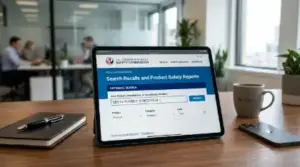
- Match Details Against Official Databases: Cross-check your product’s identification details against official safety databases. You can search verified recall lists directly on the United States Consumer Product Safety Commission (CPSC) portal or the FDA Safety & Recalls Database.
- Identify the Exact Hazard: Review the recall notice to understand the specific defect (e.g., overheating risk, choking hazard, sharp edge exposure) so you can safely handle the item.
Step 2: Stop Using the Item Safely and Render It Inoperable
As soon as you confirm your item is recalled, discontinue using it immediately. Continuing to use a recalled product invalidates certain liability claims and puts you and your household at risk.
Depending on the manufacturer’s instructions, you may be required to render the product unusable before receiving your refund or replacement. Common disposal and verification instructions include:
- Severing the Power Cord: Cutting the electrical cord of a defective appliance while unplugged and uploading a photo as proof of destruction.
- Marking with Permanent Ink: Writing “RECALLED” or your claim reference number across the product body with a permanent marker.
- Returning the Item via Prepaid Mail: Using a prepaid shipping label supplied by the manufacturer to send the item back for factory destruction or recycling.
Step 3: Register Your Claim with the Manufacturer
Once you have confirmed eligibility and safely isolated the product, submit your official remedy request directly to the company handling the recall.
- Use the Dedicated Recall Portal: Official recall notices always include a specific web landing page (e.g.,
www.[BrandName].com/recall). Submitting your information online is usually the fastest way to generate a claim number and prepaid shipping label. - Provide Accurate Contact Details: Ensure your full mailing address, phone number, and email are correct so physical checks, vouchers, or replacement units reach you without delay.
- Select Your Preferred Payment or Remedy Option: When given a choice between a repair kit, a voucher, or a refund, evaluate which option best restores your lost value. If a company offers a voucher restricted to their store, you often have the right to request a cash refund if the defect severely compromised your trust in the brand.
How to Get a Refund Without a Receipt
A common misconception is that you cannot get a refund or replacement after a product recall if you no longer have the original sales receipt. Because recalls are driven by federal safety mandates rather than standard retail return policies, proof of purchase requirements are much more flexible.
If you lack a physical receipt, use these alternative methods to validate your claim:
- Provide Physical Serial Number Photos: A photo of the physical product displaying its original serial number, model stamp, or brand logo serves as definitive proof that you own the recalled unit.
- Digital Bank or Credit Card Statements: Search your online banking history or card statements for the transaction date and store name where the item was originally purchased.
- Store Loyalty Account History: Many major retailers (such as Target, Walmart, Best Buy, or Amazon) maintain digital purchase histories associated with your account or phone number, allowing you to reprint past transaction records easily.
What to Do If the Manufacturer Refuses to Cooperate
While most companies adhere strictly to court-ordered or agency-approved recall remedies, some consumers encounter unresponsive customer service teams, long delays, or improper claim denials. If a company refuses to honor an official recall remedy, take the following steps:
- Escalate to a Supervisor: Contact customer support, reference the official CPSC or FDA recall release number, and request to speak with a dedicated recall coordinator or supervisor.
- File a Formal Regulatory Complaint: Report non-compliant manufacturers directly to the agency overseeing the recall. Submitting a report to the CPSC or FDA notifies regulators that the company’s Corrective Action Plan is failing consumers.
- Explore Class Action Opportunities: If a dangerous product defect caused financial loss or injuries not fully covered by a basic recall program, monitor platforms like Consumer Claims Guide to see if independent legal settlements or class action lawsuits are open for additional compensation.
Final Thoughts
Knowing how to get a refund or replacement after a product recall protects both your family’s safety and your financial investments. By identifying model numbers quickly, following safe product destruction guidelines, keeping clear documentation, and understanding your rights under federal law, you can confidently claim the full financial recovery or safe replacement you are entitled to receive.